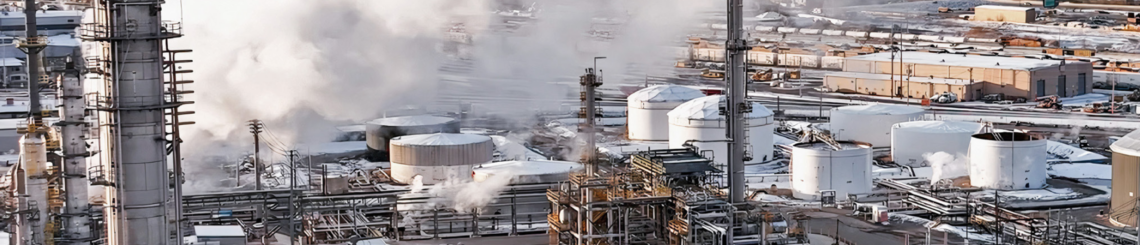
GENEVA / WASHINGTON / LONDON, June 17, 2026 — Major banks have channeled over US$250 billion into the world’s top fifteen petrochemical companies since 2019, according to a brief released today by the Center for International Environmental Law (CIEL). Deep Pockets, Dirty Profits: How Banks and Investors Are Financing the Global Petrochemical Industry exposes the financial scale of the petrochemical industry worldwide. It highlights that these investments are embedded in large-scale financial plans and backed by systemic financing, despite growing recognition of the industry’s environmental, human rights, and public health impacts.
The findings reveal that between January 2019 and June 2025, the fifteen largest petrochemical companies received US$251.9 billion in sustained financing from 240 major global banks. This capital is highly concentrated among systemically significant financial institutions. The brief identifies Citigroup (US), Bank of America (US), Mizuho Financial (Japan), JPMorgan Chase (US), HSBC (UK), Bank of China (China), Deutsche Bank (Germany), and Barclays (UK) as the primary financiers driving these investments. Citigroup stands out, having ranked among the top five petrochemical financiers every year since 2019, despite its prominent public climate commitments.
“Petrochemicals are a toxic investment for people, the environment, and the economy. They are fueling the climate crisis, damaging public health, and violating human rights, all while locking us into a system that depends on fossil fuels for decades to come. By funneling billions into petrochemicals, financial institutions are effectively entrenching a fossil economy, leaving the public and the planet to bear the catastrophic fallout. Financial institutions are fully invested in the longevity and growth of an industry that directly undermines the global transition away from fossil fuels,” said Ximena Banegas, CIEL Global Plastics and Petrochemicals Campaigner.
Petrochemicals — fossil fuel-derived substances used in plastics, fertilizers, and other synthetic materials — have become the fossil fuel industry’s lifeline to preserve oil demand. The petrochemical sector is on course to become a primary driver of global oil demand growth over the next two decades, outpacing trucks, aviation, and shipping. Despite this scale, the petrochemical sector remains comparatively underexamined and less scrutinized as a target for global bank and investor financing. CIEL’s assessment shows that petrochemicals have largely fallen outside the scope of divestment and transition frameworks, making the petrochemical industry one of the most overlooked contributors to the climate crisis.
However, the projected expansion is increasingly at odds with market and regulatory realities. The brief reveals that the petrochemical industry is facing mounting structural issues, including overcapacity, collapsing profit margins, and plant closures. Although the transition to renewable energy is accelerating a shift away from fossil fuels, geopolitical wars and conflicts — such as the US-Israel war on Iran — further expose the financial risk of economies continuing to rely on petrochemical inputs across key sectors and investing in fossil fuel-reliant production. Against this backdrop of instability, continued investments in petrochemical expansion risk locking in stranded assets and turning them into long-term financial liabilities.
The analysis also shows that financial exposure extends to institutional investors, who held nearly US$87.3 billion in petrochemical interests as of September 2025. This includes leading global public pension funds that manage the retirement savings of millions of individuals and workers, such as Norway’s Government Pension Fund Global (GPFG) and Japan’s Government Pension Investment Fund (GPIF). Among private asset managers, US-based firms dominate the landscape, with Vanguard, BlackRock, State Street, Capital Group, and Geode Capital collectively holding US$53.4 billion in a sector increasingly defined by market volatility and regulatory pressure.
“The sector faces a collision of massive overcapacity and rising liability — these are not future risks, but present ones. These risks also signal that the petrochemical industry is in a deep structural crisis and will likely continue this way. Ongoing geopolitical conflicts further underscore the inherent dangers of fossil fuel dependency, leaving the world at the mercy of volatile price shocks and supply crises. We need full transparency and standardized disclosure from financial institutions to expose the grave risks of the petrochemical industry and redirect capital toward a fossil-free economy,” Banegas added.
The brief calls on financial institutions to adopt a phased exit from the sector. CIEL urges banks to immediately halt financing for new petrochemical expansion and calls on institutional investors to divest from companies pursuing new projects. The brief also recommends that all petrochemical investee companies be required to develop and disclose credible and 1.5°C-aligned just transition plans.
Media Contact
Niccolò Sarno, CIEL Media Relations Specialist: [email protected]
Notes to Editors
Deep Pockets, Dirty Profits: How Banks and Investors Are Financing the Global Petrochemical Industry builds on the US Toxic Finance report released in March 2026 by the Center for International Environmental Law (CIEL), Break Free From Plastic US (BFFP), Friends of the Earth US, the Gulf South Fossil Finance Hub, Texas Campaign for the Environment (TCE), and the People Over Petro Coalition (POPCO).
The full Deep Pockets, Dirty Profits Brief and an interactive tool that traces the money behind petrochemical expansion are available at www.toxicfinance.org/global