
The Inter-American Court’s climate Opinion requires States across Latin America and the Caribbean to apply the standards of the Escazú Agreement—even if they have not yet ratified the treaty.
Published July 2, 2026
Para leer en español, haga clic aquí.
By Luisa Gómez, Senior Attorney at the Center for International Environmental Law.
One year after the Inter-American Court of Human Rights’ Advisory Opinion on the Climate Emergency, the debate is no longer whether countries across Latin America and the Caribbean must protect environmental defenders. That question has already been answered. The Court confirmed that all Member States of the Organization of American States (OAS)—to which the Advisory Opinion directly applies—must implement the highest standards of protection for those defending the environment.
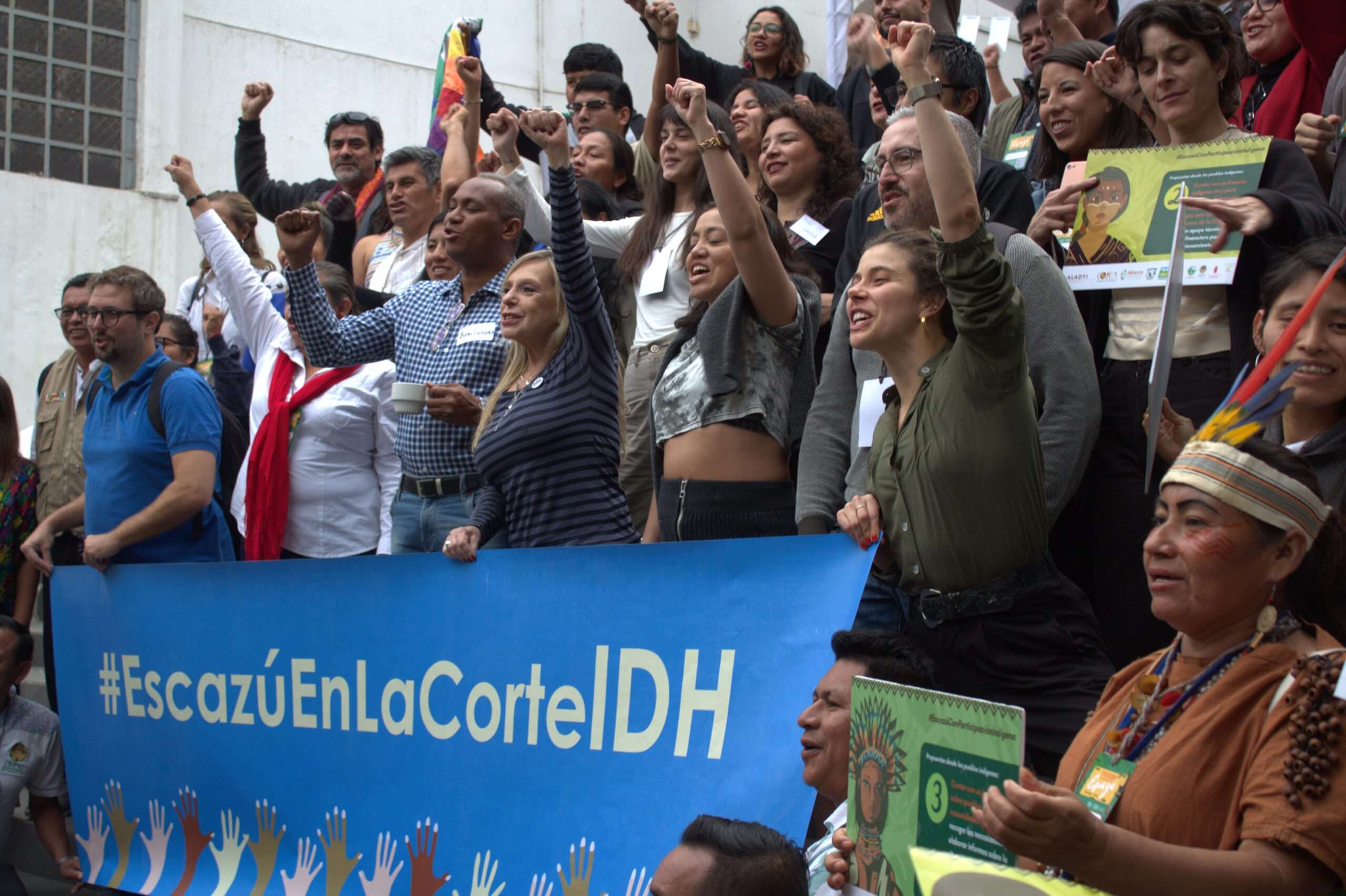
To define those standards, the Court drew extensively on the Escazú Agreement, the first legally binding regional treaty promoting environmental democracy. In doing so, it reinforced the treaty’s significance, even in countries that have not yet ratified it, including Peru, Guatemala, and Costa Rica. The implication is clear: these States can no longer treat Escazú’s standards as external, optional, or irrelevant.
How the Court Uses Escazú’s Standards
Through the Advisory Opinion, the Court relies on the Escazú Agreement as an indispensable interpretive source to clarify States’ obligations in four key areas: access to information, public participation, access to justice, and the protection of environmental defenders.
- Information: States must generate climate and environmental information, proactively disclose it, and establish systems that ensure public access.
- Participation: States must guarantee early, meaningful, and inclusive public participation in environmental decision-making with climate implications.
- Justice: States must establish mechanisms that allow people to defend the environment collectively, without requiring proof of a direct individual interest in the case. This is particularly important because climate harms often affect multiple communities.
- Protection: States must create a safe and enabling environment for environmental defenders and adopt measures to prevent attacks against them, protect those at risk, investigate violations, and hold perpetrators accountable.
The “Inter-Americanization” of Escazú
This is not the first time the Court has relied on the Escazú Agreement as an interpretive source. It has progressively done so in cases, such as Baraona Bray v. Chile, La Oroya v. Perú, and CAJAR v. Colombia.
What changes with the Climate Emergency Advisory Opinion is the legal weight the Court gives to that reference. The Court explicitly recognizes Escazú “as [a] supplementary source for interpretation of the content of the provisions of the American Convention and the Protocol of San Salvador”—two cornerstone instruments of the Inter-American human rights system—highlighting the relevance of the Agreement as a key interpretive source in relation to States’ obligations in the face of the climate crisis.
By doing so, the Court incorporates Escazú’s standards into the shared legal framework of the Inter-American system and strengthens their place within the Inter-American corpus juris—the body of legal principles and norms that guide the interpretation and application of human rights across the Americas. They no longer function solely as obligations arising under an environmental treaty, but also as authoritative standards for interpreting the human rights obligations applicable to every OAS Member State, including those that have not yet ratified the Agreement.
Non-Ratification Is No Longer an Excuse
In countries that have yet to ratify the Agreement, including Peru, Guatemala, and Costa Rica, legal experts are already identifying opportunities to implement Escazú’s standards through the Advisory Opinion. During the most recent Conference of the Parties to the Escazú Agreement, participants discussed how the Opinion could help address concrete challenges affecting countries across the region, including the criminalization of environmental defenders, growing restrictions on civic space, and the erosion of meaningful public participation.
When environmental defenders seek justice, they are often singled out because of their work and unlawfully profiled. This pattern of targeting defenders in order to harass and criminalize them has been documented in Guatemala, as shown in the Leocadio Juracán case. In that context, the Court’s recognition of collective environmental litigation provides an important indirect safeguard by reducing the risks associated with individualization.
In Peru, legal reforms have been adopted that grant the government broad powers to control foreign funding for civil society organizations, particularly those critical of political authorities. These measures openly seek to undermine organizations defending human rights, including environmental rights. While protection has been granted in specific cases, the Advisory Opinion provides a strong basis for challenging these reforms on constitutional grounds. Indeed, they constitute an attack on the right to defend rights, particularly the right to a healthy environment, which is indispensable in the context of the climate emergency.
In Costa Rica, the Advisory Opinion provides a roadmap for recognizing the autonomous right to defend rights and responding to the constitutional weakening of public participation standards in recent years. The Opinion’s content also offers a promising legal foundation for establishing a comprehensive protection mechanism for environmental defenders and adopting anti-SLAPP legislation to dismiss strategic lawsuits against public participation.
From Advisory Opinion to Action
The incorporation of Escazú’s standards into the Inter-American corpus juris marks an important step toward strengthening access rights and protections for environmental defenders in the context of the climate crisis.
But no Advisory Opinion changes reality on its own. These decisions generate change when they are used in litigation, legislative reform, public debate, and collective organizing to ensure that human rights standards addressing the climate crisis translate into concrete protections for those defending the environment.
Recently, in the Province of Mendoza, Argentina, a significant development unfolded regarding criminal charges against environmental defenders protesting against mining activities. Public authorities, citing the Advisory Opinion of the Inter-American Court of Human Rights, requested the suspension of the prosecution. They argued that continuing with the charges would be unconstitutional and could criminalize social protest and environmental advocacy.
One year later, the true measure of the Advisory Opinion’s impact will not be found in its pages, but in how judges, legislators, communities, and environmental defenders use it to strengthen protections for both the environment and the people who defend it.
Click here to dive deeper into the practical uses of the Inter-American Court of Human Rights Advisory Opinion on the climate emergency.