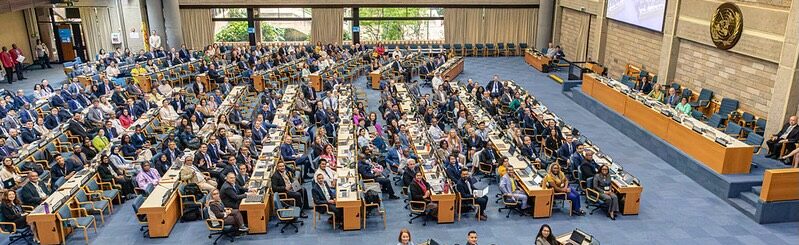
NAIROBI, Kenya, July 3, 2026 — At the conclusion of the Heads of Delegation meeting for the International Negotiating Committee (INC) to advance a plastics treaty, Center for International Environmental Law Environmental Health program director David Azoulay issued the following statement:
“The plastics treaty negotiations are resuming as trust in multilateralism is faltering. These negotiations are a test of whether multilateralism can still deliver.
“Unlike observers who were not invited to the meeting, Member States sent their top negotiators this week — signaling that the effort to solve the plastics crisis matters. But shutting civil society out of the room is unconscionable, and it cannot happen again. Participation is not a privilege; it’s a right. There is no pathway to justice and a just transition without the people most affected by the crisis having a voice in shaping the solution. Informational webinars before and after a session are no replacement for genuine participation.
“Walking into this closed-door meeting, Government delegates had a choice: follow the path of least resistance and surrender to the tyranny of consensus, or push for a treaty grounded in the best available science that actually fulfills the mandate to end plastic pollution and restore faith in multilateralism.
“Even when production and chemicals were kept off the formal agenda, a large group of countries kept finding ways to bring those conversations back. It clearly shows that the majority is not just interested in delivering a treaty. They want to find solutions that are effective and suitable for future generations.
“Our message to Member States is simple: Keep going and do not settle. A treaty based on the lowest common denominator, focusing only on national actions and waste management alone, isn’t a first step in the right direction; it’s a trap. It would only lock the world into a nightmarish cycle of expanding plastic production and increasing plastic pollution for decades to come.
“We look forward to the Chair’s official summary of the meeting and the future draft text. We hope that both accurately and comprehensively reflect measures addressing all the root causes of plastic pollution, and not only those limited to waste management, as well as those proposals that already have the support of the majority of countries for breaking the deadlock of consensus.”
###
Media Contact:
Cate Bonacini, [email protected], +1-510-520-9109 (WhatsApp, Signal)