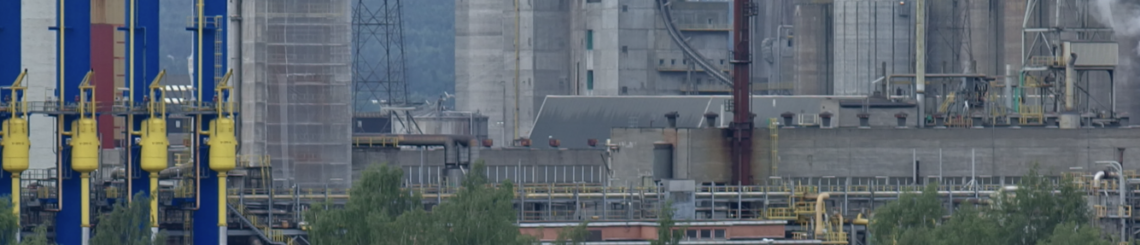
GENEVA, September 7, 2026 — The opening of Europe’s largest carbon capture project by fertilizer giant Yara in Sluiskil, Netherlands, announced today by the European Commission as a ‘strategic investment’, risks using billions in taxpayers’ money to fund a dangerous distraction that delays climate action, according to the Center for International Environmental Law (CIEL).
The ammonia plant — used to primarily make nitrogen fertilizers — is projected to capture 800,000 tons of carbon dioxide each year which the company claims it will then transport and inject 2.6 kilometers beneath the Norwegian seabed. CIEL’s experts warn that carbon capture and storage (CCS) is a speculative technology that fails to achieve its promised capture rates and does nothing to address the greenhouse gases emitted throughout the ammonia supply chain or during its use.
Reacting to the news, Rachel Kennerley, Senior International Carbon Capture Campaigner at the Center for International Environmental Law (CIEL) said:
“Carbon capture and storage does not deliver emissions reductions safely, affordably, or at scale. The technology has repeatedly failed to deliver on its promises, relies heavily on public funding, and creates risks for people and the environment.
All capture and storage projects suffer from the same problem: they distract attention and resources from cutting emissions at source and give polluting industries like fertilizer production a pass to keep on polluting.”
Ammonia, the key ingredient in synthetic nitrogen fertilizers, is produced largely from fossil gas in a highly energy- and emissions-intensive process. This leaves fertilizer-dependent food systems vulnerable to fossil fuel price shocks. CCS deepens this vulnerability by requiring additional energy for the capture process. It also fails to reduce the high rate of nitrogen lost to the environment, which harms health, accelerates climate changes, and drives pollution and biodiversity loss.
Lisa Tostado, Agrochemicals and Fossil Fuels Campaigner at the Center for International Environmental Law (CIEL) added:
“Instead of pouring public money and political attention into producing ever more fossil fertilizers with allegedly fewer emissions, the EU and its Member States should invest in reducing its overall fertilizer dependency.
Over a quarter of the nitrogen applied to fields is lost to the environment, causing severe damage to our health, climate and ecosystems. Without fundamentally reducing our reliance on synthetic fertilizers, Europe’s food system will remain deeply vulnerable to fossil energy shocks.”
###
Media Contact
Bianca Vergnaud, [email protected], +41 79 539 84 02 (WhatsApp)