
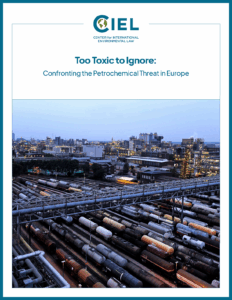
Petrochemicals—fossil fuel–derived substances used in plastics, fertilizers, and synthetic materials—are a major, yet overlooked, driver of Europe’s environmental, health, and climate crises. Despite the EU’s climate ambition and “zero pollution” goals, petrochemical production continues to lock the region into fossil dependency and toxic harm.
Our new report, Too Toxic to Ignore: Confronting the Petrochemical Threat in Europe, reveals how petrochemicals undermine EU commitments across sectors, from greenhouse gas emissions to biodiversity loss and public health. It highlights how powerful industry lobbies are pushing for deregulation and subsidies under the guise of “clean tech,” while expanding infrastructure like INEOS’s mega-cracker in Antwerp.
The report outlines that petrochemicals:
- Consume nearly 15% of EU gas and 14% of oil
- Drive 5% of total EU greenhouse gas emissions
- Cause severe health impacts in frontline communities
- Pollute soils, waterways, and ecosystems with nitrogen and plastic waste
Despite these harms, petrochemicals remain largely absent from EU climate and pollution policy. False solutions like carbon capture and fossil-based hydrogen risk entrenching the problem.
Building on CIEL’s longstanding work, this publication calls on EU institutions and Member States to:
- Recognize petrochemicals as a key climate and pollution threat
- Launch a rapid, just phasedown of fossil-based production
- Reject false solutions and redirect investment toward sustainable alternatives
- Center justice and systemic reduction—not recycling or efficiency tweaks
Europe must confront petrochemicals head-on to achieve a fossil-free, zero-pollution future.