
Published on July 9, 2026
By Jessi Parfait, Senior US Carbon Capture Campaigner, and Taylor Hodge, US Agrochemicals and Fossil Fuels Campaigner, at the Center for International Environmental Law.
Plans for one of the world’s largest blue hydrogen and ammonia projects have collapsed, wasting billions of dollars in a risky bet that frontline communities resisted for years. Despite ‘clean’ marketing, the project would have relied on dirty fracked gas.
The gas and chemicals company Air Products canceled its proposed $4.5 billion Louisiana Clean Energy Complex, wasting $2.9 billion — more than half of the overall cost — after concluding the project no longer met its financial expectations. Once promoted as the company’s largest US investment — and the world’s largest carbon sequestration project — the cancellation is more than a corporate setback. It is a signal of the end of the so-called ‘low carbon’ hydrogen hype despite years of industry promotion, generous public subsidies, and claims that these technologies can be used to tackle climate change.
This retreat shows that these projects and their false climate solutions are not just unpopular, they’re also a major financial risk to companies, investors, and communities. For Louisiana communities that opposed the project from the beginning, however, the announcement means something else: proof that projects portrayed as inevitable can be stopped.
A Flagship Project That Never Materialized
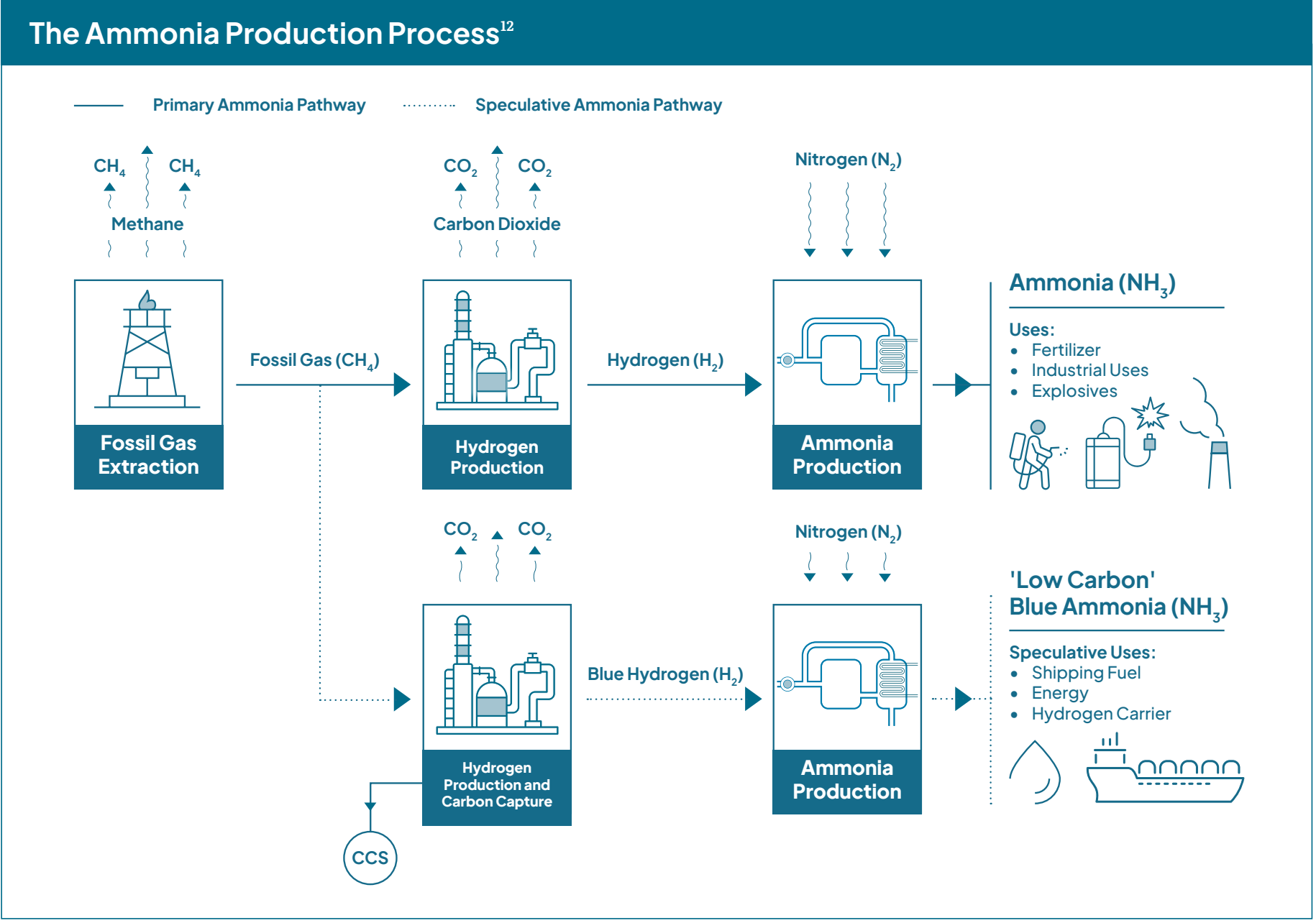
When Air Products first announced the project in 2021, the company described it as a transformational investment. Their plans included the production of 1,700 metric tons of hydrogen per day from fracked gas with up to 95 percent of emissions mitigated through carbon capture and storage (CCS). They planned to pump the hydrogen — called ‘blue’ hydrogen due to the addition of CCS — through a pipeline along the Gulf Coast for refineries and petrochemical plants, or turn it into ammonia, which is a toxic, fossil fuel-derived chemical — used primarily as a fertilizer.
That vision quickly began to unravel. By 2024, Air Products was already seeking partners to offload parts of the project, including the ammonia and carbon capture components. In 2025, it entered advanced negotiations with Norwegian fertilizer giant Yara. By mid-2026, both companies announced the project had been abandoned, citing financial concerns and an inability to find customers for a speculative market.
The cancellation reflects a broader reality: despite billions in public funds and years of political backing, many blue hydrogen projects continue to struggle with rising costs, uncertain markets, and technical challenges.
Timeline: The Rise and Fall of Air Product’s Louisiana Clean Energy Complex2021: Air Products first announced its proposed $4.5 billion Louisiana Clean Energy Complex, intended to be their largest US investment and the world’s largest carbon sequestration project. 2024: Air Products retreats from the project, seeking to offload the CCS and ammonia components. 2025: Air Products and Yara, a major ammonia fertilizer producer based in Norway, enter advanced negotiations to partner on the project. 2026: Both Air Products and Yara announce the project cancellation, citing financial concerns. |
Why This Matters Beyond One Company
Air Products is not alone. At least forty-five hydrogen and ammonia production facilities have been proposed in recent years across the US — mostly clustered in Texas and Louisiana — with only one making it to the construction phase, and many more on hold. Although more than 80 percent of ammonia produced in the US is used to manufacture fertilizer, much of the proposed buildout depends on speculative markets — including using ammonia as a shipping fuel, hydrogen carrier, and energy source — none of which are possible at scale today.
To make these projects appear climate-friendly, companies increasingly market them as ‘clean,’ ‘blue,’ or ‘low-carbon’ by pairing fossil fuel-based hydrogen and ammonia production with CCS. Yet, CCS has repeatedly failed to deliver emissions reductions while putting communities at elevated risk for pollution and related disasters. Despite that record, federal carbon capture subsidies were expanded in 2022 and again in 2025, potentially leading to the transfer of $1 trillion in public funds to private corporations over the coming decades.
The collapse of one of the industry’s flagship projects should prompt investors and policymakers alike to ask whether this business model is built on wishful thinking rather than sound evidence and economics.
Louisiana Was Forced to Bear the Risk
Air Products’ proposed Louisiana Complex would have consisted of a hydrogen and ammonia plant in Ascension, Louisiana, with thirty-eight miles of pipeline sprawling across five parishes, connecting to one of at least ten separate injection wells underneath Lake Maurepas. The project would have formed part of a larger effort to transform Louisiana into a national hub for CCS.
More than just a proposed storage site, Lake Maurepas is an important estuarine ecosystem beloved by locals for recreational activities like boating, fishing, and wildlife observation. One of the nation’s largest forested wetlands borders the lake, supporting wildlife, commercial fishing, and local businesses. For generations, communities have depended on these waters — not simply for income, but as part of their identity. From the moment residents learned about the Air Products project, they organized against it.
Today, more than thirty CCS projects are under review across the state by the Louisiana Department of Conservation and Energy. Many would be built alongside communities already burdened by decades of petrochemical pollution in the eighty-five-mile stretch along the Mississippi River between New Orleans and Baton Rouge, known locally as Cancer Alley.
These communities have long borne the health costs of fossil fuel development. Siting this experimental and knowingly dangerous CCS technology alongside frontline communities already overburdened by industrial pollution would force them to shoulder another layer of industrial risk, while companies stand to gain hundreds of billions of dollars in public money over the next twenty years through a federal tax credit.
This Isn’t the First Time
The failure of Air Products’ vision is not a surprise to anyone watching the proposed CCS buildout; the ballooning costs and failure to deliver on ambitious promises follow a familiar pattern.
The Kemper “clean coal” project in Mississippi was once celebrated as the future of carbon capture, claiming it would capture 65 percent of emissions from the power plant. Originally budgeted at $3 billion, the costs of the project more than doubled to $7.5 billion over the seven years of its construction (2010-2017), before the carbon capture system was abandoned altogether. Despite the massive investment, the Kemper facility never operated as promised and was partially demolished in 2021. Local residents are still paying for the corporate loss from this experiment through their electricity bills.
The failure of the Kemper project should have been a warning for future investments and should have prompted the more fundamental question: who bears the cost of these projects?
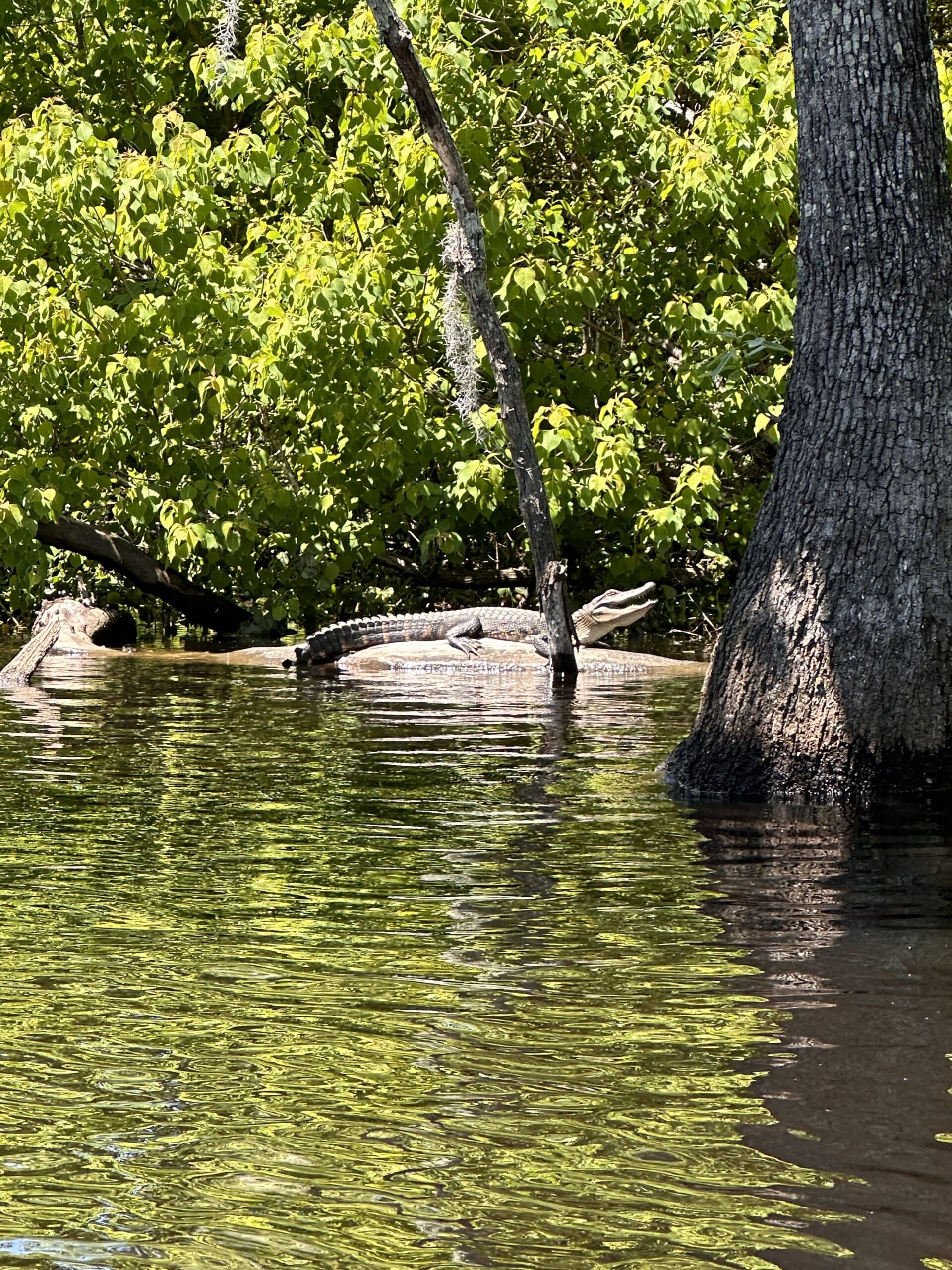
While Louisiana leads the nation in oil refining, natural gas production, and chemical production, the state consistently ranks among the poorest and least educated states in the US. CCS projects will no doubt add to the unequal environmental burden that the state population is forced to bear for the benefit of corporations. While many of the hardships can be quantified, the joy and love for the land by its residents is immeasurable. There’s no metric that captures the experience of paddling a canoe across Lake Maurepas, seeing alligators bask in the sun, listening to birdsongs echo across the wetlands, or watching the flotant — marsh grasses that float on top of the water — bob with the waves.
For the communities that have called this place home for generations, protecting the lake has never been about stopping a single project — it has been about safeguarding a way of life. The cancellation of the project is a victory not only for the hundreds of community members who organized against it — showing what is possible when people stand together to fight against false solutions — but also for the future generations who will continue to enjoy this remarkable ecosystem.
The cancellation is also a major win for communities that spent years warning about the project’s risks. Concerned residents across the complex’s planned footprint partnered with environmental groups to speak out at public hearings, organize neighbors, and challenge permits, refusing to accept that the project was inevitable.
Their persistence mattered. For years, the fossil fuel industry insisted that carbon capture represented the future — that projects like this were necessary and unavoidable. But as James Hiatt, founder of For a Better Bayou based in Lake Charles, Louisiana, put it:
“Air Products pulling out proves that nothing here is inevitable. Industry wants us to believe these projects are a done deal, that our voices don’t matter. They do. Elected and regulators didn’t hand us this win; community pressure did. Consistent, persistent organizing works.”
A Warning for The Future
Air Products’ withdrawal is not simply a failed investment by one company. It is a warning to policymakers considering whether public money should continue subsidizing projects that repeatedly fail to deliver.
Communities increasingly reject being asked to bear new risks in exchange for promises that never materialize. And this failure is likely not the last ammonia and CCS project to be canceled. Even now, many projects are on hold or delayed, further signaling to companies, investors, and communities that they are a bad bet.
The cancellation also sends a broader message: expensive, speculative technologies designed to prolong fossil fuel production aren’t fooling anyone and companies pushing these risky projects will be footing the bill.