Ammonia: Fossil Gas in a New Form (May 2026)

Fossil fuel and fertilizer companies are planning a massive build-out of fossil gas-based petrochemical facilities across the United States, concentrated mainly in Texas and Louisiana. Driven by highly speculative markets, such as using ammonia as a shipping fuel, or energy source, at least forty-five facilities have been proposed nationwide. If built, these projects could quadruple … Read More.

Curb Petrochemicals to Unlock a Full Fossil Fuel Phaseout

Petrochemicals are sewn into nearly everything around us — from the production of fertilizers, to our textiles, to our everyday packaging. Yet what if this “fabric” is not clothing us, but suffocating us? What if the glue that holds much of our modern world together is poisoning us and unraveling at its seams? The global … Read More.

Toxic Finance: The Banks and Investors Funding the Expansion of Petrochemicals in the United States (March 2026)

Petrochemical production pollutes communities, worsens the climate crisis, and deepens environmental injustice— and financial institutions are helping fund their expansion. From plastics and fertilizers to ammonia and synthetic chemicals, the petrochemical industry relies on billions in loans, underwriting, and investment to build new facilities across the United States, often in regions already overburdened by toxic … Read More.

Time to act: Securing a Sustainable Future Through Corporate Accountability (March 2026)

As climate disruption, biodiversity loss, pollution, and toxic exposure intensify worldwide, the need for stronger corporate accountability is more urgent than ever. Despite growing international human rights and environmental frameworks, transnational corporations often enjoy stronger protections under trade and investment agreements than the communities affected by their operations. The FIAN International, with the support of … Read More.

ICJ Litigation Notes Digest (March 2026)

On 23 July 2025, the International Court of Justice (ICJ) issued a historic unanimous Advisory Opinion on States’ obligations in relation to climate change. Building on earlier opinions from the International Tribunal for the Law of the Sea and the Inter-American Court of Human Rights, the ICJ clarified the scope and content of States’ duties … Read More.

How to Apply the Polluter-Pays Principle to the PFAS Pollution Crisis (January 2026)

PFAS, also known as “forever chemicals,” contaminate water, soil, and food, harming ecosystems and posing serious risks to human health. PFAS pollution has become a major environmental and public health crisis across Europe and globally. While the Polluter-Pays Principle (PPP) has existed for more than 50 years, the PFAS crisis starkly illustrates how critical it … Read More.

No Profit Without Accountability for People and the Planet (January, 2026)

The world is facing the escalating triple planetary crisis of climate change, pollution, and biodiversity loss, driven largely by unrestrained corporate extraction and profit-driven economic models. Extractive and polluting industries such as mining, large-scale agriculture, and industrial forestry degrade ecosystems, undermine the right to a clean, healthy, and sustainable environment, and violate interconnected human rights, … Read More.

CIEL 2025 Impact Report

The past year made one truth undeniable: protecting human rights and our planet is more urgent—and more contested—than ever. Around the world, communities and defenders have faced rising threats from fossil fuel interests and political backlash. Yet, despite these headwinds, CIEL’s legal advocacy delivered extraordinary wins that put dignity, safety, and justice at the center … Read More.

Justicia Climática y Derechos Humanos: Estándares y Herramientas Jurídicas de la Opinión Consultiva 32/25 de la Corte Interamericana de Derechos Humanos (Octubre 2025)

El 3 de julio de 2025, la Corte Interamericana de Derechos Humanos emitió una Opinión Consultiva histórica que declara que la crisis climática es una emergencia de derechos humanos. La decisión deja claro que los Estados y las empresas tienen obligaciones vinculantes, en virtud del derecho internacional, de abordar tanto las causas como las consecuencias … Read More.

Climate Justice and Human Rights: Legal Standards and Tools from the Inter-American Court’s Advisory Opinion 32/25 (October 2025)

On July 3, 2025, the Inter-American Court of Human Rights issued a historic Advisory Opinion declaring the climate crisis a human rights emergency. The decision clarified that States and corporations have binding obligations under international law to address both the causes and consequences of climate change. And it left no room for doubt: protecting human … Read More.

A Gathering Storm: How Marine Geoengineering Threatens All Ocean Basins (October 2025)

Marine geoengineering — large-scale technological intervention in ocean systems intended to alter the global climate — is increasingly entering mainstream policy discussions. Falsely framed as climate solutions, these extreme and highly speculative technologies — including ocean alkalinity enhancement, ocean fertilization, biomass sinking, and marine cloud brightening — pose profound risks to marine ecosystems and coastal … Read More.

Too Toxic to Ignore: Confronting the Petrochemical Threat in Europe (October 2025)

Petrochemicals—fossil fuel–derived substances used in plastics, fertilizers, and synthetic materials—are a major, yet overlooked, driver of Europe’s environmental, health, and climate crises. Despite the EU’s climate ambition and “zero pollution” goals, petrochemical production continues to lock the region into fossil dependency and toxic harm. Our new report, Too Toxic to Ignore: Confronting the Petrochemical Threat … Read More.

The International Investment Legal Regime, Climate Change, and Human Rights: An Overview (October 2025)

Embedded in thousands of international investment agreements, the little-known investor-state dispute settlement (ISDS) system allows foreign companies to sue states for damages when they take measures to protect the environment and the public. ISDS threatens climate action and undermines countries’ compliance with their legal obligations to prevent and remedy climate harm—presenting an impermissible barrier to … Read More.

EPA Rollback: A New Era of Deregulation

The federal government is moving well outside of standard processes to grant powerful corporations exemptions from potentially life-saving emissions regulations. This move, coupled with the large and fast-moving buildout of new petrochemical production facilities across the US (and globally), is further threatening communities’ right to breathe clean air and live in a healthy environment. A … Read More.

From Overproduction to Opportunity: EU Leadership in the Plastics Treaty

The European plastics industry is facing a sharp downturn. Between 2022 and 2023, EU plastic production dropped by 8.3%, and recycled plastics fell by 7.8%. Major facilities like TotalEnergies’ Antwerp cracker have shut down due to overcapacity, signaling deeper industry instability. This decline aligns with mounting evidence on the environmental, health, and human rights harms … Read More.

Building Flexibility: Key Considerations for the Future Plastics Treaty

When engaging in international negotiations, parties must carefully balance competing interests, avoid unintended negative consequences, and ensure that agreements effectively address issues at hand. Multilateral environmental agreements (MEAs) utilize various tools to maintain this delicate balance. These tools, collectively known as flexibility mechanisms, play a critical role in negotiations. Flexibility mechanisms encourage broad adoption by … Read More.

Conflicto de intereses en el Tratado Mundial sobre los Plásticos

Desde hace tres años, los gobiernos negocian un acuerdo jurídicamente vinculante sobre la contaminación por plásticos para hacer frente a esta crisis (Tratado Mundial sobre los Plásticos). Los intereses de la industria del plástico, movida por el afán de lucro, entran en conflicto directo con la salud pública, la protección del medio ambiente y los … Read More.

Conflict of Interest in the Global Plastics Treaty (May 2025)

For the past three years, governments have been negotiating a legally binding agreement on plastic pollution to address this crisis (Global Plastics Treaty). The interests of the plastics industry, driven by profit motives, directly conflict with public health, environmental protection, and human rights, specifically opposing provisions to reduce the production of plastics or regulate the … Read More.

Alto Maipo: A Fight for Justice, A Legacy of Harm (April 2025)

Once touted as a model for sustainable energy, the Alto Maipo Hydroelectric Project became one of Chile’s most controversial infrastructure developments and a cautionary tale of environmental destruction, human rights violations, and massive financial fallout. While Alto Maipo has left lasting scars for the affected communities, it also catalyzed key policy changes aimed at preventing … Read More.

Fracking for Plastics: Exposing the Supply Chain Behind the Global Plastic Crisis

New research unveils the toxic supply chain fueling global plastic production, shedding new light on the critical players driving the plastics and climate crises. A new investigation by Stand.earth Research Group (SRG) and the Center for International Environmental Law (CIEL) reveals that 25+ of the world’s largest household brands are driving fossil fuel expansion in … Read More.

Making Oceans Off-Limits to Offshore Oil and Gas (March 2025)

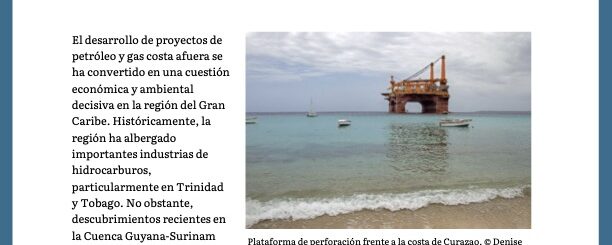
Fossil fuel companies are sinking ever more money into undersea reserves, taking their operations to ever deeper and more remote waters. Today offshore projects represent more than 30 percent of global oil and gas production and they are only growing in numbers. This rising wave of offshore oil and gas activity  threatens two global commons … Read More.

Remedy and Reparations for Climate Harm: The Human Rights Case (November 2024)

The climate crisis is undeniably a human rights crisis. Intensifying extreme weather events and slow-onset effects such as rising temperatures, persistent drought, and sea-level rise are leading to widespread human rights violations. Those impacts are disproportionately affecting individuals, Peoples, and communities who are in vulnerable situations due to historical and present marginalization and intersecting forms … Read More.

Ensuring a Human Rights-Based Approach to the International Legally Binding Instrument to End Plastic Pollution, Including in the Marine Environment

The plastics crisis directly infringes on a variety of human rights, including the right to life, to the highest attainable standard of health, to a clean, healthy, and sustainable environment, to adequate housing, to water and sanitation, to food, and an adequate standard of living. States have an obligation to protect, respect, and promote human … Read More.

International Investment Law and ISDS: Overcoming Legal Barriers to Effective Climate Action under the UNFCCC and the Paris Agreement

The urgent need to address climate change is hindered by legal barriers within international investment law, particularly through Investor-State Dispute Settlement (ISDS) mechanisms. ISDS provisions enable foreign investors to sue governments over climate policies that affect their investments, particularly in the fossil fuel sector. This legal threat has a chilling effect on governments, deterring them … Read More.

Preparatory Materials for the Fifth Plastics Treaty Negotiations (INC-5)

In 2022, United Nations Member States adopted a mandate to negotiate an international legally binding instrument to end plastic pollution. The mandate sets out a goal for the plastics treaty to be negotiated before the end of 2024. In November 2024, Member States will come together to participate in the fourth session of the Intergovernmental Negotiating … Read More.

The Risks of Geoengineering: Accelerating Biodiversity Loss and Compounding Planetary Crises (October 2024)

Geoengineering, once confined to the periphery of climate crisis discussions, has started to enter the mainstream discourse, creating a dangerous distraction for decision-makers from the real climate solutions that can and must be implemented today.  Defined as the “deliberate intervention in the planetary environment of a nature and scale intended to counteract anthropogenic climate change … Read More.

Exiting Petrochemicals: A Policy Guide for Financial Institutions

As global temperatures rise and governments implement decarbonization policies, the fossil fuel industry is pushing for a major expansion in the production of plastic and petrochemical products. The unchecked expansion of petrochemicals would be devastating for the environment, climate, and human health. The financial sector plays a crucial role in enabling or limiting this damage. Consumers … Read More.

Final Provisions of International Legal Instruments: Key Considerations for the Future Plastics Treaty

Final provisions — the technical provisions that help describe how a treaty will enter into force, be ratified, and undergo future revisions — are critical for a future treaty’s success. The brief Final Provisions of International Legal Instruments: Key Considerations for the Future Plastics Treaty provides insight and analysis into how multilateral environmental agreements, including … Read More.

Declaración de Manaos: Un Llamado a la Justicia Climática

Después de que la Corte Interamericana de Derechos Humanos celebrara audiencias para su Opinión Consultiva sobre la emergencia climática, los Pueblos Indígenas y Tribales, las comunidades y la sociedad civil se unieron para crear la Declaración de Manaos sobre Derechos Humanos en la Emergencia Climática. Esta declaración insta a la Corte a articular estándares mínimos … Read More.

Manaus Declaration: A Call for Climate Justice

After the Inter-American Court of Human Rights (IACtHR) held hearings for its climate Advisory Opinion, Indigenous and Tribal Peoples, communities, and civil society united to create the Manaus Declaration on Human Rights in the Climate Emergency. This Declaration calls on the Court to articulate minimum standards for safeguarding human rights in the context of the … Read More.

States’ Human Rights Obligations in the Context of Climate Change: Guidance Provided by the UN Human Rights Treaty Bodies (August 2024)

As governments and intergovernmental organizations have recognized, climate change has adverse impacts on a wide range of human rights. Consequently, existing human rights obligations defined under legally binding treaties must inform climate action. These obligations require that climate policies are designed and implemented to effectively protect the rights of those most affected by the climate … Read More.

Negotiation Timelines of International Legal Instruments (July 2024)

The United Nations Environment Assembly resolution that kickstarted the process of negotiating a future plastics treaty sets out an ambitious timeline, with the goal of finishing by the end of 2024. With the end of the negotiations nearing and a substantial amount of work still needed to finalize the treaty before it can be ratified, … Read More.

Legal Memorandum Advisory Opinion on Climate Change Delivered by the International Tribunal for the Law of the Sea: Relevance for the International Court of Justice Climate Advisory Proceedings (July 2024)

On May 21, 2024, the International Tribunal for the Law of the Sea (ITLOS) issued its landmark Advisory Opinion (AO) on the protection of the marine environment from pollution caused by climate change. The Opinion is a groundbreaking first in international law — clarifying the legal obligations of States to address climate change as a … Read More.

Making Plastic Polluters Pay: How Cities and States Can Recoup the Rising Costs of Plastic Pollution (June 2024)

Plastic pollution is not just an environmental issue; it’s a pervasive crisis that deeply impacts public health and economic stability. The burden of this crisis falls disproportionately on the shoulders of state, county, and municipal authorities, who invest vast resources managing significant challenges—from clogged water systems and littered landscapes to the immense costs of managing … Read More.

Loss And Damage Fund: A Participation Blueprint (April 2024)

This advocacy brief underscores the importance of establishing robust, inclusive mechanisms for meaningful participation by all rightsholders, especially affected communities and groups. It also outlines the strategic modalities the Board of the Loss and Damage Fund (LDF) should prioritize when developing operational policies and guidelines. This brief aims to bridge the gap between policy intentions and actionable outcomes, … Read More.

Legal Models to Control Primary Plastic Polymer Production: Key Elements to Consider in the Context of a Treaty to End Plastic Pollution

Current and projected levels of plastic production are severely undermining any potential solution to end plastic pollution. To effectively address the climate crisis, safeguard human health, ensure the enjoyment of human rights, and mitigate biodiversity loss, the future plastics treaty must control and reduce the production of primary plastic polymers. Parties to other Multilateral Environmental … Read More.

Preparatory Materials for the Fourth Plastics Treaty Negotiations (INC-4)

In 2022, United Nations Member States adopted a mandate to negotiate an international legally binding instrument to end plastic pollution. The mandate sets out a goal for the plastics treaty to be negotiated before the end of 2024.  In April 2024, Member States will come together to participate in the fourth session of the Intergovernmental … Read More.

Deep Trouble: The Risks of Offshore Carbon Capture and Storage (November 2023)

Facing growing scrutiny over their contributions to climate change, polluting industries are increasingly looking for ways to cover up their continued emissions rather than phase out the fossil fuels driving them. One way companies claim the world can continue producing and using oil, gas, and coal without harming the climate is through carbon capture and … Read More.

Direct Air Capture: Big Oil’s Latest Smokescreen (November 2023)

As our window to prevent catastrophic climate impacts narrows, technological fixes like direct air capture (DAC) are gaining dangerous momentum. While pulling pollution out of the atmosphere might sound like a good idea, DAC and other carbon capture schemes are unproven, expensive, and may actually accelerate climate change. Direct Air Capture: Big Oil’s Latest Smokescreen … Read More.

Opening the Rosewood Pandora’s Box (November 2023)

Consideration of Risks and Impacts associated with Prematurely Lifting the Trade Ban for SC77 October 2023 Research from the Environmental Investigation Agency (EIA) and the Center for International Environmental Law (CIEL) indicates that the CITES trade suspension of Pterocarpus erinaceus – an endangered species of rosewood found in the dry savannahs of western and central … Read More.

Implementation, Compliance, and Reporting: Key Elements to Consider in the Context of a Treaty to End Plastic Pollution

Treaties provide obligations for States to undertake individual or joint action to implement international legal instruments. Implementation typically refers to the process by which countries establish national laws and policies that reflect treaty obligations. Measures can range from national implementation plans (NIPs) to periodic assessments, compliance provisions and mechanisms, and national reporting. This brief outlines … Read More.

Reducing Plastic Production to Achieve Climate Goals: Key Considerations for the Plastics Treaty Negotiations (September 2023)

Plastic production is currently on an upward trajectory and is projected to continue increasing exponentially. Global plastic polymer production doubled from 2000 to 2019, reaching 460 million tonnes (Mt) per year, and it is anticipated to almost triple from 2019 levels by 2050. This uncontrolled growth threatens the global climate, as well as human health, … Read More.

Preparatory Materials for the Plastics Treaty INC-3 (November 2023)

In 2022, United Nations Member States adopted a mandate to negotiate an international legally binding instrument to end plastic pollution. The mandate sets out a goal for the plastics treaty to be negotiated before the end of 2024.  The negotiations about the treaty’s design, reach, and function began first in an ad hoc Open-Ended Working … Read More.

National Implementation Plans and National Action Plans: Key Elements to Consider in the Context of a Treaty to End Plastic Pollution

Treaties, including multilateral environmental agreements (MEAs), provide obligations for States to undertake either individual or joint action to implement international legal instruments. Implementation refers to the process by which countries establish national policies that reflect their treaty obligations. This brief clarifies the difference between three common implementation measures: national implementation plans (NIPs), national action plans (NAPs), … Read More.

Calculated Risk: Australia’s Exposure to Illegal Logging (July 2023)

Illegal logging and associated trade is a problem of global proportions, with devastating impacts on climate, biodiversity, and the livelihoods of millions of people. Forest crime has severe adverse economic and social impacts in both producing and importing countries through the loss of much-needed tax revenues. Illegal logging can only prevail as long as international … Read More.

Investor-State Dispute Settlement Mechanisms and the Right to a Clean, Healthy, and Sustainable Environment (June 2023)

Bilateral and multilateral trade and investment treaties often include investor-State dispute settlement (ISDS) mechanisms, which enable foreign investors to sue States for taking actions that adversely affect the value of their investments. These mechanisms can undermine States’ ability to take robust climate and environmental action to respect, protect, and fulfill the human right to a … Read More.

Chilean Communities’ Responses and Recommendations to Accountability Mechanisms of Development Banks Regarding the Alto Maipo Hydroelectric Project (June 2023)

In January 2017, CIEL supported Chilean organization Ecosistemas and the Coordinadora Ciudadana No Alto Maipo (CCNAM) to file complaints about the Alto Maipo Hydroelectric Project at the accountability mechanisms of the Inter-American Development Bank (IDB) and the International Finance Corporation (IFC). After nearly six years of waiting, these processes are in the final stages. In … Read More.

Deep Trouble: The Risks of Offshore Carbon Capture and Storage (June 2023)

Facing growing scrutiny over their contributions to climate change, polluting industries are increasingly looking to the ocean as a potential dumping ground for their carbon dioxide waste. Rather than phase out fossil fuels, oil, gas, and petrochemical companies claim they can, instead, capture some of their carbon dioxide emissions and inject them underground or under … Read More.

Preparatory Materials for the Plastics Treaty INC-2 (May 2023)

In March 2022, United Nations Member States adopted a mandate to negotiate a global plastics treaty at the resumed fifth session of the United Nations Environment Assembly (UNEA-5.2). The mandate, “End plastic pollution: Towards an international legally binding instrument,” sets out a goal for the treaty to be negotiated before the end of 2024. While … Read More.

States’ Human Rights Obligations in the Context of Climate Change: Guidance Provided by the UN Human Rights Treaty Bodies (May 2023)

As governments and intergovernmental organizations have recognized, climate change has adverse impacts on a wide range of human rights. Consequently, existing human rights obligations defined under legally binding treaties must inform climate action. These obligations require that climate policies effectively protect the rights of those most affected by the climate crisis, including by averting harm … Read More.

Carbon Capture and Storage: Frequently Asked Questions (April 2023)

Carbon capture and storage (CCS) is purported to collect or “capture” carbon dioxide generated by high-emitting activities, and is therefore commonly proposed as a technology to help meet global energy and climate goals. However, CCS does not address the core drivers of the climate crisis or meaningfully reduce greenhouse emissions, and should not distract from … Read More.

Non-Party Trade Provisions in Multilateral Environmental Agreements: Key Elements for Consideration in the Context of a Treaty to End Plastic Pollution (April 2023)

Multilateral environmental agreements (MEAs) aim to address environmental issues of global concern by creating uniform and streamlined approaches and rules that apply to all parties.  Treaties serve as agreements between two (or more) States that enter into an agreement, thus creating specific obligations and rights for those parties. It is generally recognized that a treaty … Read More.

Beyond Recycling: Reckoning with Plastics in a Circular Economy (March 2023)

As the world considers how to address the growing impacts of the triple planetary crises of pollution, climate change, and biodiversity loss, many discussions point toward a circular economy approach as a much-needed solutions pathway. The term circular economy is routinely used in conversations and policy discussions that center on re-envisioning the full system of … Read More.

Lost in Translation: Lessons from the IPCC’s Sixth Assessment on the Urgent Transition from Fossil Fuels and the Risks of Misplaced Reliance on False Solutions (March 2023)

The Sixth Assessment Cycle (AR6) of the Intergovernmental Panel on Climate Change (IPCC) will conclude in March 2023 with the release of a Synthesis Report (SYR) and Summary for Policymakers (SPM). This assessment cycle covers six major reports that the IPCC has released since 2014. Lost in Translation, a joint analysis produced by the Center for … Read More.

Trade Provisions in Multilateral Environmental Agreements: Key Elements for Consideration in the Context of a Treaty to End Plastic Pollution

Plastics trade is an essential component of discussions to develop an international legally binding instrument to end plastic pollution. Accordingly, trade provisions must be included in the future plastics treaty. “Non-Party Trade Provisions in Multilateral Environmental Agreements” examines how trade has been incorporated into other MEAs and provides lessons for plastics. Contents include: why States … Read More.

Integrating Human Rights in Nationally Determined Contributions: A Toolkit for Practitioners (November 2022)

Integrating Human Rights in Nationally Determined Contributions (NDCs): A Toolkit for Practitioners is a practical guide to aid States, policymakers, development agencies, civil society, and other relevant stakeholders in integrating human rights in their NDCs. Climate change threatens ecosystems, wildlife, and human rights. Many effects can already be seen today, including rising sea levels, glacial … Read More.

Fossils, Fertilizers, and False Solutions: How Laundering Fossil Fuels in Agrochemicals Puts the Climate and the Planet at Risk (October 2022)

Fertilizers and pesticides are interdependent inputs to a destructive food production model that is contributing to catastrophic biodiversity collapse, toxic pollution, and the violation of human rights. But there is an often-overlooked dimension of the threat posed by these agrochemicals: their fossil fuel origins. Synthetic nitrogen fertilizer and pesticides are fossil fuels in another form, … Read More.

Winter Is Coming: Plastic Has To Go: A Case for Decreasing Plastic Production to Reduce the European Union’s Dependence on Fossil Fuels and Russia (September 2022)

Russia’s invasion of Ukraine has revealed, in a brutal way, Europe’s dependence on fossil fuels, particularly Russian oil and gas. In the midst of an energy crisis, EU governments demand far more action — and adaptation — from individual citizens than from industry sectors that consume the lion’s share of fossil feedstock and fossil energy, while they also … Read More.

The Export of Banned Pesticides to Africa and Central America: Legal Opinion (September 2022)

Decades of research have resulted in the banning and severe restriction of some highly hazardous pesticides including aldrin, dieldrin, and dichloro-diphenyl-trichloroethane (DDT) under international law. But there is no international, legally-binding agreement to phase out these highly hazardous pesticides more generally. In response, many States have adopted domestic measures to address the problem. However, many … Read More.

How Can the European Union Legislation Tackle Microplastics Pollution (July, 2022)

With plastic production expected to skyrocket in the coming years, microplastic pollution is set to become a runaway challenge if adequate preventive measures are not put in place quickly. Effective solutions that prioritize prevention must be implemented now to prevent microplastic pollution and minimize its impacts on our global ecosystems and climate for the generations … Read More.

Japanese Bank Financing of the East African Crude Oil Pipeline – Backgrounder on Environmental, Social, and Governance Risk (June 2022)

Japanese private finance is currently backing one of the most controversial fossil fuel expansion projects in Africa: the 5 billion USD, 1443-kilometer East African Crude Oil Pipeline (EACOP), which would transport 216,000 barrels per day of electrically heated crude oil from Uganda to the port of Tanga in Tanzania for export. Construction of the pipeline … Read More.

10 Essentials for a ‘Truly Green’ Green Equity Approach (June 2022)

In 2020, the International Finance Corporation (IFC, the World Bank’s private sector arm) published its “Approach to Greening Equity in Financial Institutions” (Green Equity Approach or GEA). The GEA committed the IFC to end equity investments in financial institutions that do not have a plan to phase out coal-related investments by 2030. This initiative to “green” equity investments … Read More.

Ensuring Meaningful Stakeholder Involvement in the Plastics Treaty Negotiations

Following the United Nations Environment Assembly’s adoption of a mandate to negotiate an international, legally binding instrument to end plastic pollution entitled “End plastic pollution: towards an international legally binding instrument,” it is essential to prepare the work for the intergovernmental negotiating committee (INC). The INC is tasked with discussing and finalizing the objective, scope, … Read More.

Tackling the trade in illegal timber: a comparative study of legal frameworks (May, 2022)

Illegal logging and trade in illegal timber is a major cause of deforestation, which contributes to the global impact of climate change, depletion of natural resources, and decreasing biodiversity, thereby frustrating efforts towards sustainable forest management. It further negatively affects countries’ socio-economic growth, food security, and poverty alleviation efforts, in particular local communities who depend … Read More.

IPCC Unsummarized: Unmasking Clear Warnings on Overshoot, Techno-fixes, and the Urgency of Climate Justice

IPCC Unsummarized: Unmasking Clear Warnings on Overshoot, Techno-fixes, and the Urgency of Climate Justice is a joint analysis produced by the Center for International Environmental Law (CIEL) and the Heinrich Boell Foundation, examining the stark and surprising gap between IPCC consensus and the mitigation pathways emphasized in the Working Group III report, particularly in the … Read More.

Joint submission to the Organisation for Economic Co-operation and Development (OECD) on Investment Agreements and Climate Change

Investment law and policy can play a significant role in either addressing — or exacerbating — some of the world’s greatest challenges, from climate change to human rights and environmental protection. In light of this, the Organisation for Economic Co-operation and Development (OECD) has developed a work program on “The Future of Investment Treaties,” which … Read More.

States’ Human Rights Obligations in the Context of Climate Change: Guidance Provided by the UN Human Rights Treaty Bodies (March 2022)

As governments and intergovernmental organizations have recognized, climate change has adverse impacts on a wide range of human rights. Consequently, existing human rights obligations defined under legally binding treaties must inform climate action. These obligations require that climate policies effectively protect the rights of those most affected by the climate crisis. They also require that … Read More.

Beyond the Limits: New IPCC WG II Report Highlights How Gambling on Overshoot is Pushing the Planet Past a Point of No Return (Feb 2022)

A joint publication of the Center for International Environmental Law (CIEL) and Heinrich Boell Foundation, “Beyond the Limits: New IPCC Working Group II Report Highlights How Gambling on Overshoot is Pushing the Planet Past a Point of No Return” examines the IPCC Working Group II report’s findings and significance for: overshoot scenarios, technologies and approaches … Read More.

Briefing Note Series: Climate Governance and Human Rights

  Promoting Human Rights in Climate Action: Report from the Dubai Climate Conference (COP28) FEBRUARY 2024, 10 pages This briefing note summarizes and analyzes key developments at the 28th session of the Conference of the Parties (COP28) to the United Nations Framework Convention on Climate Change (UNFCCC) in December 2023 related to the integration of … Read More.

Toward a New Instrument Addressing the Full Life Cycle of Plastics Overview of the Typology of International Legal Instruments (Jan 2022)

Over the last decade, there has been a swell of voluntary initiatives and regulations designed to address the plastics crisis. More recently, the subject of an intergovernmental, legal instrument designed to address pollution from plastic has emerged in various international fora. Between 2017 and 2020, parties, regional groups, and stakeholders submitted 10 formal propositions concerning … Read More.

Legal Acquisition Findings: A Handbook (Jan 2022)

Trading flora and fauna can pose challenges to protecting endangered species, particularly when that trade is conducted illegally. The Convention on International Trade in Endangered Species of Wild Fauna and Flora (CITES) is tasked with regulating the trade of endangered species, certifying that species were not obtained in contravention of the laws that protect them. … Read More.

The Future of Arbitration under the Energy Charter Treaty (Dec 2021)

The protection that bilateral and multilateral investment treaties afford to the fossil fuel industry presents a significant roadblock to climate mitigation action. Under these investment law frameworks, foreign investors benefit from a broad range of protections against the impacts of changes to a host State’s regulatory regime. This legal briefing explains how the implications of … Read More.